Adrenal Insufficiency
Master the patient approach to adrenal insufficiency through our interactive clinical case with clear visual guides.
ADRENAL
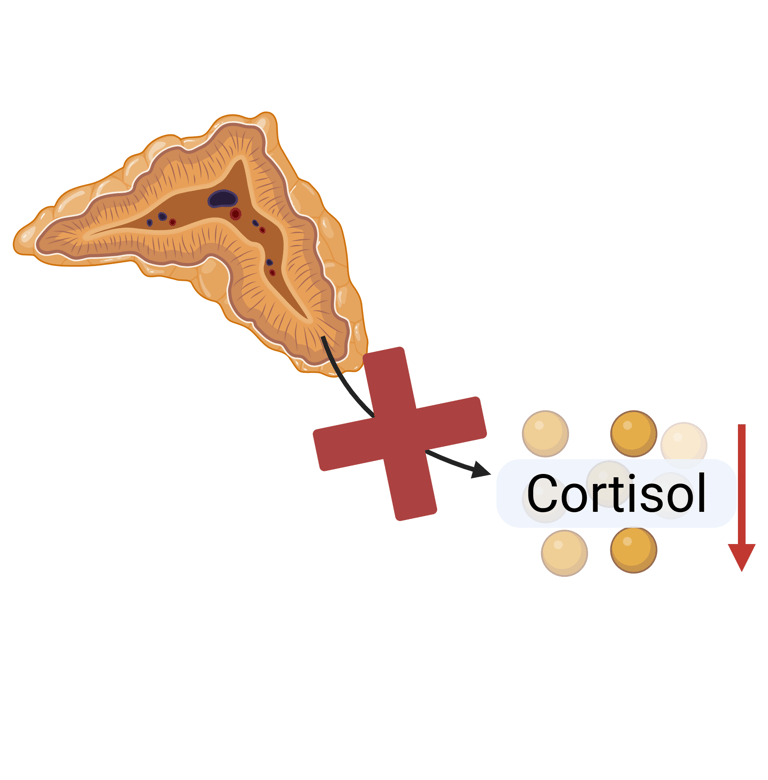
Case Presentation
Mr. L., a 38-year-old male with no significant past medical history, was referred to the endocrinology clinic by his general practitioner (GP) for evaluation of persistent fatigue and unintentional weight loss. The patient reported that over the past six weeks, he had experienced progressively worsening fatigue, decreased appetite, and an overall sense of malaise.
The patient files do not indicate any medication prescriptions. Prior to referral, routine laboratory investigations were performed by his GP (see below). Concerned about possible malignancy, the GP ordered a thoracoabdominal CT scan, which did not reveal any suspicious lesions. Upper endoscopy and colonoscopy were unremarkable. In a follow up visit, the symptoms persisted. Upon a detailed clinical exam the GP noticed subtle darkening of his skin over the knuckles and elbows, prompting the GP to suspect adrenal insufficiency and request an endocrinology consultation, without any further diagnostic tests performed in the GP’s office.
Laboratory values obtained 3 weeks ago in the general practitioners office:
Thyroid function tests (TSH, free T4 and T3): within the reference range
Sodium: 132 mmol/L (reference: 135–145 mmol/L)
Potassium: 5.4 mmol/L (reference: 3.5–5.0 mmol/L)
Fasting glucose: 4.8 mmol/L (reference: 3.9–5.5 mmol/L)
Renal Function: normal
Referral & Emergency Evaluation
In the referral text, there are already some clues about the cause of the condition. Mark them for you. We do not provide a solution at this point but elaborate on these clues during the upcoming evaluation
The patient reports a progressively worsening fatigue, decreased appetite, and an overall sense of malaise over the past six weeks. He also noted occasional dizziness, particularly upon standing. Additionally, he noted a subtle darkening of his skin over the knuckles and elbows, that developed over the past 6 months. There was no history of fever, night sweats, gastrointestinal bleeding, or recent infections.
On presentation to the endocrinology clinic, Mr. L.’s vital signs revealed a blood pressure of 110/65 mmHg lying down, with a postural drop to 100/60 mmHg on standing, and a resting heart rate of 84 beats per minute, with mild symptoms of dizziness. His BMI was 21 kg/m², with a report of a modest weight loss of 1.5 kg in the past two months.
Now let us proceed with taking the patient’s history.
History
The patient denies any symptoms or signs suggestive of infectious or neoplastic disease. He also reports no manifestations of other autoimmune conditions or features indicative of genetic disorders associated with adrenal insufficiency. His pubertal development was normal, and he has fathered two healthy children.
The patient has no family history of adrenal insufficiency or associated genetic disorders. However, his sister and his mother have been diagnosed with Graves’ disease.
We now proceed to the clinical examination of the patient.
Exam
As mentioned above, Mr. L.’s vital signs revealed a blood pressure of 110/65 mmHg lying down, and a resting heart rate of 84 beats per minute. His BMI was 21 kg/m². On physical examination, notable hyperpigmentation of the palmar creases, elbows, and knuckles was observed. Othervise, there were no additional skin findings. Cardiopulmonal and abdominal examination was unremarkable. Visual field testing was not performed in this patient.
Diagnosis
Laboratory evaluation of our patient:
Basal serum cortisol (8 AM): 79 nmol/L (reference: 140–690 nmol/L)
ACTH: 185 pmol/L (reference range: 2–11 pmol/L)
Management
Despite clinical and biochemical features suggestive of impending adrenal crisis, the patient was hemodynamically stable, showed no severe electrolyte abnormalities, and was able to take oral medication. Following shared decision-making and considering the patient’s preference, management was initiated in the outpatient setting with immediate glucocorticoid replacement and detailed safety-net instructions.
Management was initiated with immediate glucocorticoid replacement using hydrocortisone and mineralocorticoid replacement with fludrocortisone. Hydrocortisone was administered intravenously at an initial dose of 50 mg following the consultation—before basal cortisol and ACTH results were available—due to the high likelihood of adrenal insufficiency based on prior laboratory findings and the clinical presentation. This ensured adequate glucocorticoid and mineralocorticoid coverage until a definitive maintenance regimen could be established. The patient was subsequently instructed to continue oral hydrocortisone at 25 mg per day, divided into two doses (15 mg in the morning, 10 mg at midday). Fludrocortisone therapy was started later the same day, guided by hyperkalemia and markedly elevated ACTH levels.
The patient was educated on “sick-day rules”, the need for dose adjustments during illness or stress, and the importance of carrying an emergency steroid card.
Follow Up
Follow-up at two weeks demonstrated marked clinical improvement: fatigue had lessened, appetite was returning, and blood pressure improved to 115/75 mmHg supine, without any postural drop. Electrolytes normalized (Na 138 mmol/L, K 4.5 mmol/L). Over the ensuing months, the patient continued regular endocrinology follow-up, with periodic monitoring of electrolytes, renal function, blood pressure, and symptom assessment. Long-term management focused on maintaining physiologic steroid replacement, early recognition of adrenal crises, and screening for other autoimmune conditions such as thyroid disease or type 1 diabetes, given the autoimmune etiology.
References
All Illustrations have been created by Endo-cases.com with Biorender.com
R. Louise Rushworth u. a., „Adrenal Crisis“, New England Journal of Medicine 381, Nr. 9 (2019): 852–61, https://doi.org/10.1056/NEJMra1807486;
Evangelia Charmandari u. a., „Adrenal Insufficiency“, Lancet (London, England) 383, Nr. 9935 (2014): 2152–67, https://doi.org/10.1016/S0140-6736(13)61684-0;
Eystein S. Husebye u. a., „Adrenal Insufficiency“, Lancet (London, England) 397, Nr. 10274 (2021): 613–29, https://doi.org/10.1016/S0140-6736(21)00136-7;
Anand Vaidya u. a., „Adrenal Insufficiency in Adults: A Review“, JAMA 334, Nr. 8 (2025): 714–25, https://doi.org/10.1001/jama.2025.5485;
Irina Bancos u. a., „Diagnosis and Management of Adrenal Insufficiency“, The Lancet. Diabetes & Endocrinology 3, Nr. 3 (2015): 216–26, https://doi.org/10.1016/S2213-8587(14)70142-1;
Alexander Lewis u. a., „Diagnosis and Management of Adrenal Insufficiency“, Clinical Medicine (London, England) 23, Nr. 2 (2023): 115–18, https://doi.org/10.7861/clinmed.2023-0067;
Skyler Lentz u. a., „Diagnosis and Management of Adrenal Insufficiency and Adrenal Crisis in the Emergency Department“, The Journal of Emergency Medicine 63, Nr. 2 (2022): 212–20, https://doi.org/10.1016/j.jemermed.2022.06.005;
Stefan R. Bornstein u. a., „Diagnosis and Treatment of Primary Adrenal Insufficiency: An Endocrine Society Clinical Practice Guideline“, The Journal of Clinical Endocrinology and Metabolism 101, Nr. 2 (2016): 364–89, https://doi.org/10.1210/jc.2015-1710;
Felix Beuschlein u. a., „European Society of Endocrinology and Endocrine Society Joint Clinical Guideline: Diagnosis and Therapy of Glucocorticoid-Induced Adrenal Insufficiency“, European Journal of Endocrinology 190, Nr. 5 (2024): G25–51, https://doi.org/10.1093/ejendo/lvae029;
Shien Chen Lee u. a., „Hypoglycaemia in Adrenal Insufficiency“, Frontiers in Endocrinology 14 (2023): 1198519, https://doi.org/10.3389/fendo.2023.1198519;
Nicholas Heming u. a., „Immune Effects of Corticosteroids in Sepsis“, Frontiers in Immunology 9 (Juli 2018), https://doi.org/10.3389/fimmu.2018.01736;
Sophie Samuel u. a., „Pharmacologic Characteristics of Corticosteroids“, Journal of Neurocritical Care 10, Nr. 2 (2017): 53–59, https://doi.org/10.18700/jnc.170035;
Donatella Capalbo u. a., „The Multiple Faces of Autoimmune Addison’s Disease in Children“, Frontiers in Endocrinology 15 (September 2024), https://doi.org/10.3389/fendo.2024.1411774.
© 2025 EndoCases. All rights reserved.
This platform is intended for medical professionals, particularly endocrinology residents, and is provided for educational purposes only. It supports learning and clinical reasoning but is not a substitute for professional medical advice or patient care. The information is general in nature and should be applied with appropriate clinical judgment and in accordance with local guidelines.
Portions of the text on this website were edited with the assistance of Artificial Intelligence to improve grammar and phrasing, as English is not my first language. All medical content, ideas for illustrations, and overall structure are original and based on the author’s own expertise and the cited medical literature. No AI tools were used to generate or influence the educational content itself.
All of the content is independent of my employer.
Use of this site implies acceptance of our Terms of Use
Contact us via E-Mail: contact@endo-cases.com