A Case of Worsening Glucose Control in Diabetes Mellitus
Master the patient approach to the patient with pre-known diabetes mellitus and worsening glucose control through our interactive clinical case with clear visual guides.
DIABETES MELLITUS
Case Presentation
A 62-year-old male patient is referred to you by his primary care physician because of worsening glycemic control in the context of known type 2 diabetes mellitus.
The referral notes indicate stable glycemic control over the past two years with metformin 500 mg twice daily and empagliflozin 10 mg once daily, with an HbA1c (= A1C) consistently around 7.2%.
Over the past six months, A1C has increased to 8.6%, and three months later to 9.1%. Six months ago, in response to the initial rise in A1C, the primary care physician increased the metformin dose to 1000 mg twice daily.
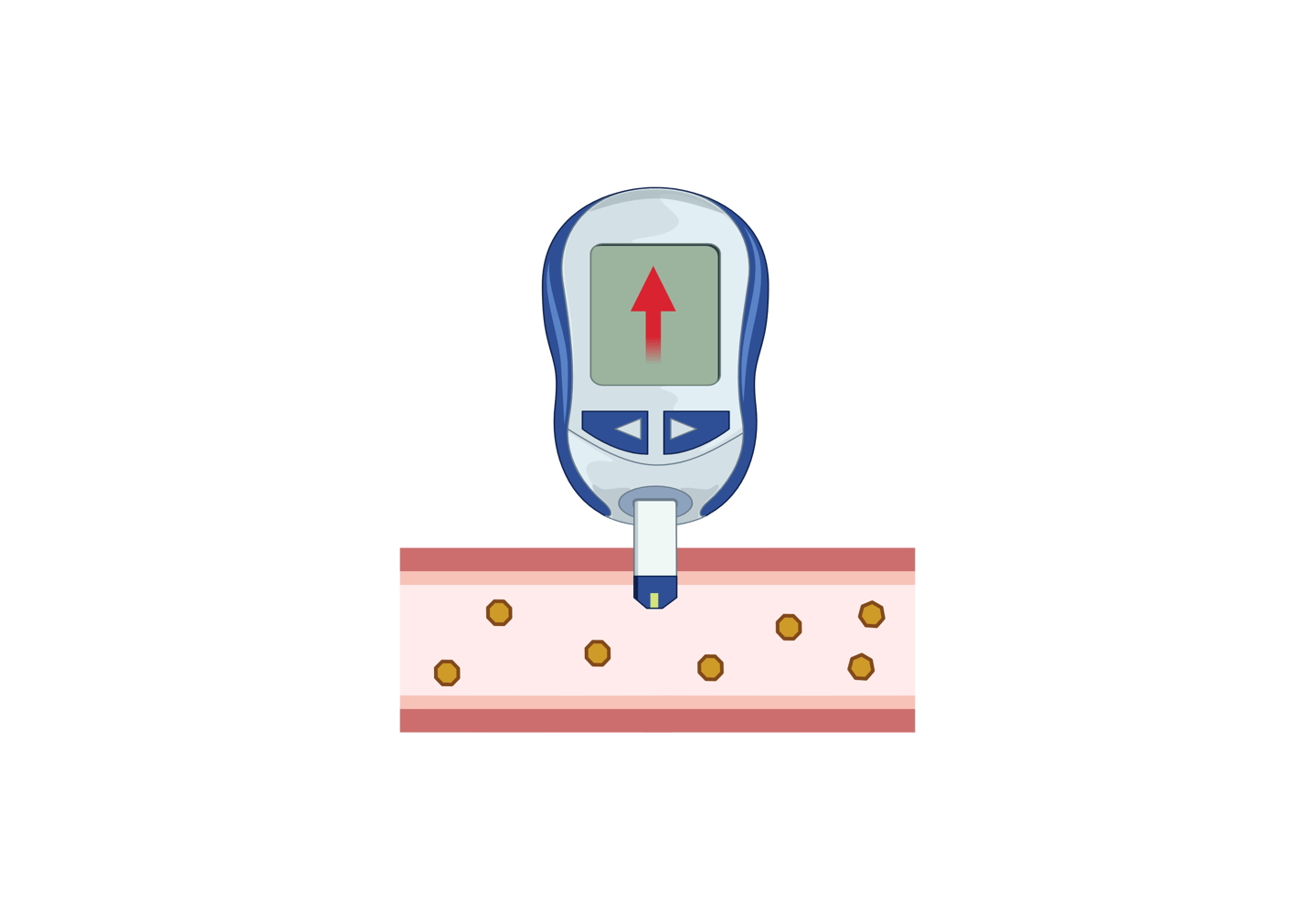
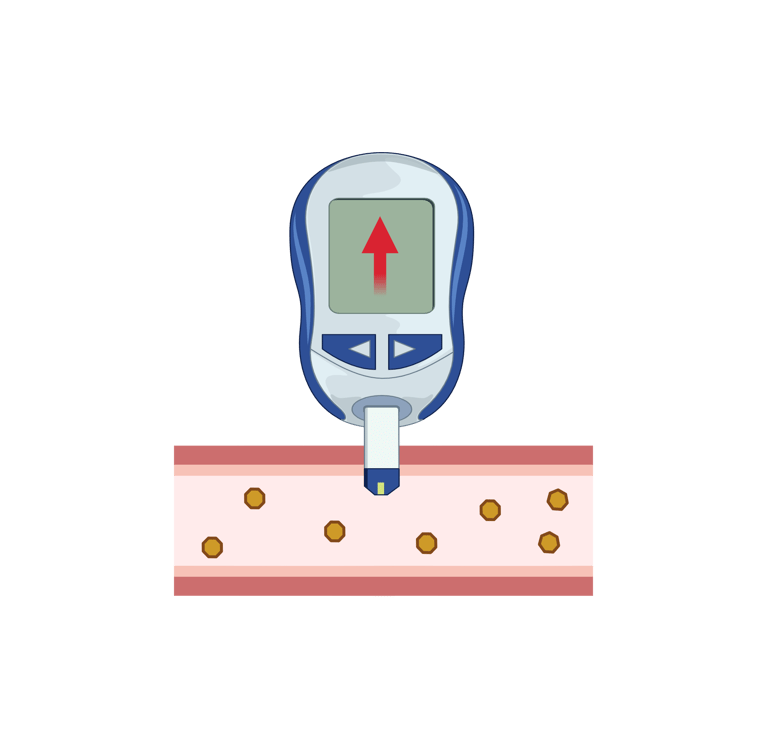
The patient was advised to perform capillary blood glucose measurements three times/day on two days of the week. The recorded values are shown below.
Capillary Blood Glucose Measurements in mmol/l
Referral & Emergency Evaluation
Capillary Blood Glucose Measurements in mg/dl


History
The patient reports that his type 2 diabetes was diagnosed approximately eight years ago during a routine check-up. Initially, the condition was managed with lifestyle modifications, but metformin was initiated after six months of persistent hyperglycemia. His weight remained stable for the first seven years following diagnosis; over the past year, he has gained approximately 5 kg, reaching 95 kg. To date, his treatment has included only metformin and empagliflozin, with no significant adverse effects reported. His medical history is otherwise notable for hypertension, dyslipidemia, and benign prostatic hyperplasia, for which he takes lisinopril, rosuvastatin and tamsulosin daily.
The patient confirms consistent adherence to metformin but, upon direct questioning, admits that he has been skipping empagliflozin due to concerns about urinary tract infections related to his prostate condition. He did not disclose this to his primary care physician, fearing he might disappoint him. He reports no symptoms suggestive of depression or cognitive impairment, and none were observed during the consultation.
There are no historical indications of insulin deficiency or pancreatic disease. He has not experienced weight loss, fever, malaise, or other symptoms suggestive of pancreatic cancer. As mentioned, he gained 5 kg over the past year and acknowledges neglecting lifestyle measures, including increased snacking, higher carbohydrate intake, and sugary beverages. There are no current signs or symptoms of infection, and he is not taking medications known to induce insulin resistance.
Clinical Exam
The clinical assessment revealed:
Vital signs: Blood pressure 146/87 mmHg, heart rate 78/min, temperature 36.2 °C. These values indicate he is hemodynamically stable, without fever or hypotension.
Anthropometrics: Height 177 cm, weight 95 kg, BMI 30.1 kg/m², waist circumference 103 cm.
Skin and metabolic signs: No acanthosis nigricans observed.
Signs of hypercortisolism: None detected. There is no evidence of proximal muscle wasting, facial plethora, or central obesity beyond baseline obesity.
General assessment: Hydration appears adequate. The patient is alert and oriented, with no signs of lethargy, confusion, or deep breathing.
Diagnostic Evaluation
Management
The patient expresses strong motivation to reintegrate lifestyle measures to improve glycemic control and actively pursue weight reduction. In Switzerland, mandatory health insurance covers the cost of the above suggested therapy in the present clinical constellation. After appropriate instruction, self-administration of a GLP-1 receptor agonist appears feasible and acceptable to him. There is no history of gallbladder disease, diabetic retinopathy, or pancreatitis.
References
All Illustrations in this Clinical Case have ben Created in https://BioRender.com
American Diabetes Association Professional Practice Committee for Diabetes*, „2. Diagnosis and Classification of Diabetes: Standards of Care in Diabetes—2026“, Diabetes Care 49, Nr. Supplement_1 (2025): S27–49, https://doi.org/10.2337/dc26-S002;
American Diabetes Association Professional Practice Committee for Diabetes*, „6. Glycemic Goals, Hypoglycemia, and Hyperglycemic Crises: Standards of Care in Diabetes—2026“, Diabetes Care 49, Nr. Supplement_1 (2025): S132–49, https://doi.org/10.2337/dc26-S006;
American Diabetes Association, „8. Pharmacologic Approaches to Glycemic Treatment“, Diabetes Care 40, Nr. Supplement_1 (2017): S64–74, https://doi.org/10.2337/dc17-S011;
American Diabetes Association Professional Practice Committee for Diabetes*, „9. Pharmacologic Approaches to Glycemic Treatment: Standards of Care in Diabetes—2026 | Diabetes Care | American Diabetes Association“, https://diabetesjournals.org/care/article/49/Supplement_1/S183/163934/9-Pharmacologic-Approaches-to-Glycemic-Treatment;
American Diabetes Association Professional Practice Committee for Diabetes*,„13. Older Adults: Standards of Care in Diabetes—2026“, Diabetes Care 49, Nr. Suppl 1 (2025): S277–96, https://doi.org/10.2337/dc26-S013;
Apostolos Tsapas u. a., „Comparative Effectiveness of Glucose-Lowering Drugs for Type 2 Diabetes: A Systematic Review and Network Meta-Analysis“, Annals of Internal Medicine 173, Nr. 4 (2020): 278–86, https://doi.org/10.7326/M20-0864;
Rita R. Kalyani u. a., „Diagnosis and Treatment of Type 2 Diabetes in Adults: A Review“, JAMA 334, Nr. 11 (2025): 984–1002, https://doi.org/10.1001/jama.2025.5956;
Zhikai Zheng u. a., „Glucagon-like Peptide-1 Receptor: Mechanisms and Advances in Therapy“, Signal Transduction and Targeted Therapy 9, Nr. 1 (2024): 234, https://doi.org/10.1038/s41392-024-01931-z;
Zhikai Zheng u. a., „Glucagon-like Peptide-1 Receptor: Mechanisms and Advances in Therapy“, Signal Transduction and Targeted Therapy 9, Nr. 1 (2024): 234, https://doi.org/10.1038/s41392-024-01931-z;
Carla Scaroni u. a., „Glucose Metabolism Abnormalities in Cushing Syndrome: From Molecular Basis to Clinical Management“, Endocrine Reviews 38, Nr. 3 (2017): 189–219, https://doi.org/10.1210/er.2016-1105;
David B. Sacks u. a., „Guidelines and Recommendations for Laboratory Analysis in the Diagnosis and Management of Diabetes Mellitus“, Diabetes Care 46, Nr. 10 (2023): e151–99, https://doi.org/10.2337/dci23-0036;
Alan R. Saltiel, „Insulin Signaling in Health and Disease“, The Journal of Clinical Investigation 131, Nr. 1 (2021): e142241, 142241, https://doi.org/10.1172/JCI142241;
Michael A. Nauck und Juris J. Meier, „MANAGEMENT OF ENDOCRINE DISEASE: Are All GLP-1 Agonists Equal in the Treatment of Type 2 Diabetes?“, European Journal of Endocrinology 181, Nr. 6 (2019): R211–34, https://doi.org/10.1530/EJE-19-0566;
Melanie J. Davies u. a., „Management of Hyperglycemia in Type 2 Diabetes, 2022. A Consensus Report by the American Diabetes Association (ADA) and the European Association for the Study of Diabetes (EASD)“, Diabetes Care 45, Nr. 11 (2022): 2753–86, https://doi.org/10.2337/dci22-0034;
Anthony L. McCall u. a., „Management of Individuals With Diabetes at High Risk for Hypoglycemia: An Endocrine Society Clinical Practice Guideline“, The Journal of Clinical Endocrinology & Metabolism 108, Nr. 3 (2023): 529–62, https://doi.org/10.1210/clinem/dgac596;
Giovanni Targher u. a., „Metabolic Dysfunction–Associated Steatotic Liver Disease“, New England Journal of Medicine 393, Nr. 7 (2025): 683–98, https://doi.org/10.1056/NEJMra2412865;
Thomas F. Stoop u. a., „Pancreatic Cancer“, The Lancet 405, Nr. 10485 (2025): 1182–202, https://doi.org/10.1016/S0140-6736(25)00261-2;
Pia V. Röder u. a., „Pancreatic Regulation of Glucose Homeostasis“, Experimental & Molecular Medicine 48, Nr. 3 (2016): e219–e219, https://doi.org/10.1038/emm.2016.6;
Kaixin Zhou u. a., „Pharmacogenomics in Diabetes Mellitus: Insights into Drug Action and Drug Discovery“, Nature Reviews Endocrinology 12, Nr. 6 (2016): 337–46, https://doi.org/10.1038/nrendo.2016.51;
Sylvie Hall u. a., „Pharmacokinetics and Clinical Implications of Semaglutide: A New Glucagon-Like Peptide (GLP)-1 Receptor Agonist“, Clinical Pharmacokinetics 57, Nr. 12 (2018): 1529–38, https://doi.org/10.1007/s40262-018-0668-z;
Clifford J. Bailey, „Pharmacological Therapies for Type 2 Diabetes: Future Approaches“, Diabetologia 69, Nr. 1 (2026): 20–35, https://doi.org/10.1007/s00125-025-06581-6;
Naomi R. M. Schwartz u. a., „Potential Cost-Effectiveness of Risk-Based Pancreatic Cancer Screening in Patients With New-Onset Diabetes“, Journal of the National Comprehensive Cancer Network: JNCCN 20, Nr. 5 (2021): 451–59, https://doi.org/10.6004/jnccn.2020.7798;
Amar Babikir Elhussein u. a., „The Clinical Implications of the Interaction between Hypothyroidism and Diabetes Mellitus“, Scientific Reports 15, Nr. 1 (2025): 40838, https://doi.org/10.1038/s41598-025-24465-y;
Richard I. G. Holt u. a., „The Management of Type 1 Diabetes in Adults. A Consensus Report by the American Diabetes Association (ADA) and the European Association for the Study of Diabetes (EASD)“, Diabetes Care 44, Nr. 11 (2021): 2589–625, https://doi.org/10.2337/dci21-0043;
Ayush Chauhan und Snehal S. Patel, „Thyroid Hormone and Diabetes Mellitus Interplay: Making Management of Comorbid Disorders Complicated“, Hormone and Metabolic Research 56, Nr. 12 (2024): 845–58, https://doi.org/10.1055/a-2374-8756;
Ehtasham Ahmad u. a., „Type 2 Diabetes“, Lancet (London, England) 400, Nr. 10365 (2022): 1803–20, https://doi.org/10.1016/S0140-6736(22)01655-5.


Mein Beitragsinhalt
© 2025 EndoCases. All rights reserved.
This platform is intended for medical professionals, particularly endocrinology residents, and is provided for educational purposes only. It supports learning and clinical reasoning but is not a substitute for professional medical advice or patient care. The information is general in nature and should be applied with appropriate clinical judgment and in accordance with local guidelines.
Portions of the text on this website were edited with the assistance of Artificial Intelligence to improve grammar and phrasing, as English is not my first language. All medical content, ideas for illustrations, and overall structure are original and based on the author’s own expertise and the cited medical literature. No AI tools were used to generate or influence the educational content itself.
All of the content is independent of my employer.
Use of this site implies acceptance of our Terms of Use
Contact us via E-Mail: contact@endo-cases.com